
Table of Contents
- Key Highlights:
- Introduction
- The Benefits of a Resistance Band Workout
- Key Resistance Band Exercises
- Integrating Resistance Bands into Your Routine
- Practical Tips for Traveling with Resistance Bands
Key Highlights:
- Resistance bands are an effective, portable workout solution that can enhance strength and muscle activation.
- Incorporating resistance band exercises can improve performance in traditional strength training movements.
- A simple resistance band workout can be performed anywhere, making it ideal for travel or home fitness regimens.
Introduction
Staying active while on the go presents unique challenges, particularly when access to a gym or fitness equipment is limited. Whether you’re traveling for business or leisure, or simply facing the constraints of a home environment, maintaining a consistent fitness routine can be daunting. However, the emergence of versatile tools like resistance bands has revolutionized the way individuals approach their workouts. These lightweight, portable bands can help you engage in a full-body workout that enhances muscle strength, endurance, and overall fitness, all while fitting conveniently into your luggage or closet. This article delves into the benefits of resistance band workouts and provides a structured routine that you can perform anywhere, enabling you to stay fit regardless of your circumstances.
The Benefits of a Resistance Band Workout
Resistance bands serve as an excellent alternative to traditional weights. While they may not offer the same level of progressive overload as heavy weights, they provide unique benefits that can enhance your fitness journey. Research has shown that incorporating resistance bands into your training can improve strength parameters in exercises like squats, bench presses, and bicep curls. A notable study found that participants who integrated resistance band training into their regimen added an average of 6 kg to their lifts within just eight weeks.
Activation of Muscles
One of the standout advantages of resistance bands is their ability to activate specific muscle groups before engaging in a full workout. For instance, activating the glutes before lower body exercises ensures that the correct muscles are utilized, minimizing the risk of injury and improving performance. This pre-activation can lead to more effective workouts, particularly in compound movements such as hip thrusts, where proper glute engagement is crucial for optimal results.
Versatility and Convenience
Another compelling reason to incorporate resistance bands into your routine is their versatility. They come in various resistance levels, allowing users to tailor their workouts according to their fitness level and goals. Moreover, resistance bands can be used to target almost every muscle group, making them a comprehensive tool for strength training. Whether you’re in a hotel room, at a park, or at home, resistance bands can be easily used in various settings, ensuring that you never miss a workout.
Key Resistance Band Exercises
To get started with resistance bands, all you need is a small loop band. Below are five effective resistance band exercises that target both the upper and lower body. Aim to perform the designated number of repetitions for each exercise, allowing 20 to 30 seconds of rest between each move. Repeat the entire circuit three or more times for a comprehensive workout.
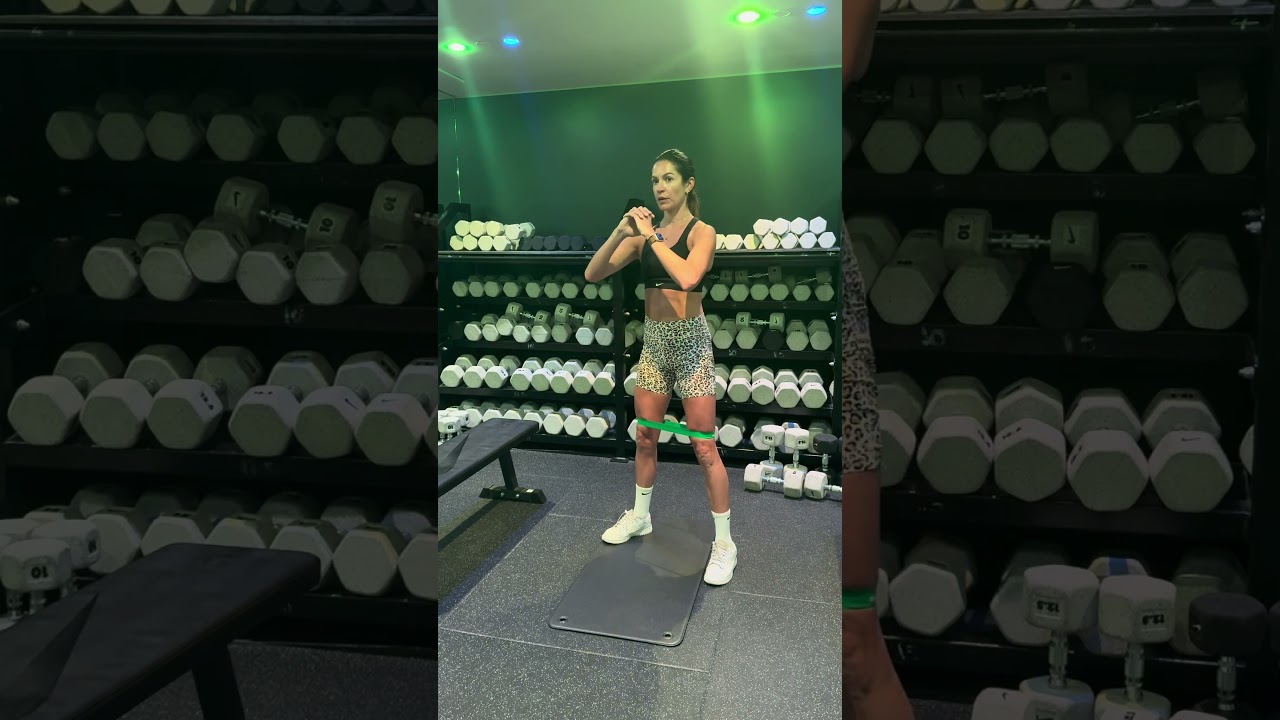
1. Squats
Squats are a fundamental exercise that targets the quads, hamstrings, and glutes. Using a resistance band can add an extra challenge to this classic movement.
-
Instructions:
- Place the band just above your knees.
- Step your knees out so they are wider than hip-width, ensuring there is tension in the band.
- Push your hips back and bend your knees until your thighs are at least parallel to the ground.
- Pause, then drive up through your heels to return to the starting position.
- Repetitions: 20 reps
2. Hip Thrusts
Hip thrusts are excellent for targeting the glutes, and incorporating a resistance band can enhance engagement.
-
Instructions:
- Sit on the ground with your upper back against a bench or a sturdy surface.
- Place the band just above your knees and position your feet flat on the ground, shoulder-width apart.
- Drive through your heels, lifting your hips towards the ceiling while keeping your back straight.
- Squeeze your glutes at the top of the movement, then lower back down.
- Repetitions: 20 reps

3. Seated Rows
Seated rows are fantastic for building back strength and improving posture.
-
Instructions:
- Sit on the floor with your legs extended in front of you, the band wrapped around your feet.
- Hold the ends of the band with both hands and sit up straight.
- Pull the band towards you, squeezing your shoulder blades together as you row.
- Slowly return to the starting position.
- Repetitions: 15 reps
4. Chest Press
The chest press targets the pectoral muscles, shoulders, and triceps.
-
Instructions:
- Anchor the band behind you at chest height, either by closing it in a door or wrapping it around a sturdy object.
- Stand facing away from the anchor point, holding the ends of the band at chest level.
- Press the band forward until your arms are fully extended, then return to the starting position.
- Repetitions: 15 reps
5. Lateral Band Walks
This exercise focuses on the hip abductors and glutes, essential for lower body strength and stability.
-
Instructions:
- Place the band just above your knees.
- Stand with your feet hip-width apart and knees slightly bent.
- Step to the side, maintaining tension in the band, and follow with the opposite foot.
- Continue stepping to the side for the designated reps, then switch directions.
- Repetitions: 10 steps each side
Integrating Resistance Bands into Your Routine
Resistance bands can easily be integrated into your existing workout routine, whether at home, at the gym, or on the road. Here are some tips for maximizing their effectiveness:
Warm-Up and Activation
Before any workout, use resistance bands for a dynamic warm-up. Perform activation exercises like banded lateral walks or glute bridges to engage key muscle groups. This preparation can enhance your performance and reduce the risk of injury.
Combining with Free Weights
Resistance bands can complement free weight exercises. For example, you can perform a squat with a band while holding dumbbells to increase the challenge. The added resistance will engage your muscles in a different way, promoting growth and strength gains.
Progressive Overload with Bands
While resistance bands do not allow for traditional progressive overload, you can still increase the challenge. Use bands with higher resistance, perform more repetitions, or reduce rest time between sets to continue progressing in your fitness journey.
Practical Tips for Traveling with Resistance Bands
When traveling, the key to maintaining a workout routine is convenience. Here are some practical tips for using resistance bands effectively while on the go:
Choose the Right Bands
Select lightweight, portable bands that fit easily into your luggage. Consider bands with adjustable resistance levels to accommodate varying workout intensities.
Create a Travel Workout Plan
Before your trip, outline a simple workout plan that includes resistance band exercises. This preparation will help you stay focused and motivated to maintain your routine while away from home.
Utilize Available Spaces
Look for open spaces to perform your resistance band workouts, such as hotel rooms, parks, or gyms. Many exercises can be done with minimal space and no additional equipment.
Stay Consistent
Aim to incorporate your resistance band workouts into your daily routine while traveling. Even short sessions can be effective and help you maintain your fitness levels.
FAQ
How do resistance bands compare to traditional weights?
Resistance bands provide a different type of resistance compared to free weights. While weights allow for progressive overload, resistance bands can help activate muscles and improve endurance. Both have unique benefits, and incorporating both into your routine can yield optimal results.
Can anyone use resistance bands?
Yes, resistance bands are suitable for individuals of all fitness levels. They can be used for rehabilitation, strength training, and general fitness. It's essential to choose the appropriate resistance level based on your fitness level and goals.
How often should I use resistance bands?
You can use resistance bands as part of your regular workout routine. Aim for 2-3 times a week in addition to other strength training or cardio activities. Adjust the frequency based on your fitness goals and recovery needs.
Are resistance bands safe?
When used correctly, resistance bands are safe for most individuals. It's important to ensure proper form during exercises to avoid injury. If you have any pre-existing conditions, consult with a healthcare professional before starting a new fitness routine.
Can I build muscle with resistance bands?
Yes, resistance bands can help build muscle, particularly when combined with a well-rounded strength training program. While they may not replace heavy weights for maximum muscle gains, they are an effective tool for enhancing strength, endurance, and muscle activation.
Incorporating resistance bands into your fitness regimen can transform how you approach workouts, allowing you to remain active whether at home or on the road. Their portability, versatility, and effectiveness make them a valuable addition to any fitness enthusiast's toolkit.
